

Curling...
My view of Ailsa Craig, the granite of Olympic stones

I’ve been really enjoying the Winter Olympics. I’ve presented a lot of Summer Olympics, but there’s something very special about the Winter Games.
Climate-wise, Britain isn’t the place to pursue most winter sports. So every four years, I love the fact that the masses learn about new sports and new athletes. We discover supremely talented people who have dedicated their lives to something that often gets very little coverage - apart from every four years.
I love the fact that the UK gets obsessed with curling. But if you’re Scottish, curling is something that is part of the culture. In fact, I have grown up with the beautiful view of Ailsa Craig, the volcanic plug that provides every stone used at the Olympic Games. I took this photo yesterday on my walk.
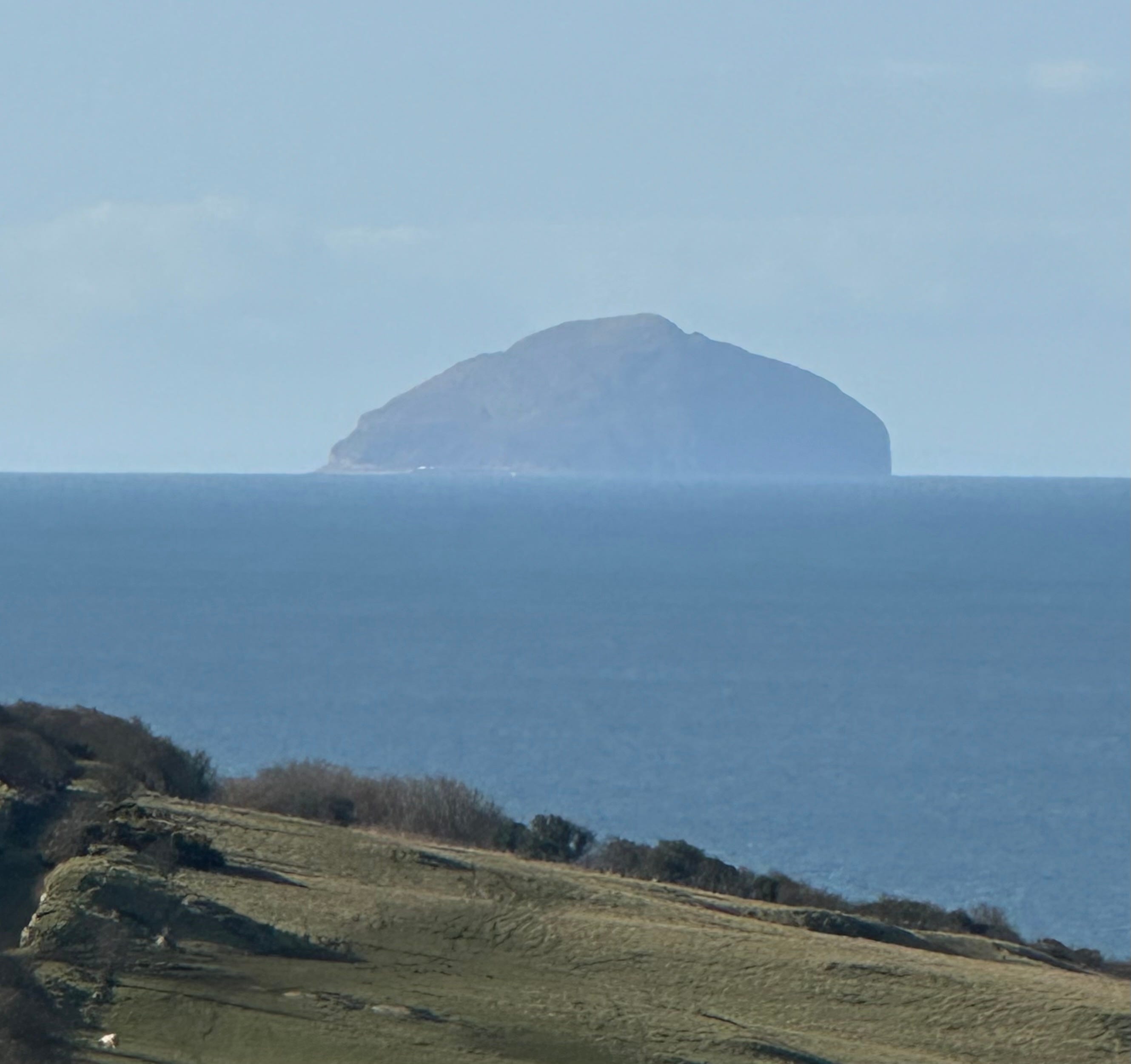
Ailsa Craig rises from the Firth of Clyde off Scotland’s west coast and is a small volcanic plug. For more than a century, its rare granite has been used to make the world’s finest curling stones.
The island contains two types of granite, and the stone from that island is known to be among the densest granites ever discovered.
Modern Olympic curling stones, made by Kays Scotland, weigh about 20 kilograms, or 44 pounds, and are meticulously shaped, polished and fitted with coloured handles. If treated properly, a curling stone can last decades.
Curling originated in 16th century Scotland, where players slid stones across frozen ponds and lochs. It became deeply embedded in Scottish culture, with local curling clubs formalising rules and traditions that still influence the game today. The sport eventually spread internationally, retaining its distinctive Scottish heritage, most notably in the materials used for the stones.
Curling made its Olympic debut as a demonstration sport in 1924 and again in 1932, 1988 and 1992, before becoming an official medal event in 1998 at the Nagano Games. Since then, Olympic stones have almost exclusively come from Ailsa Craig granite. The precision of these stones ensures fairness and allows athletes to compete at the highest level, where millimetres can decide the outcome.
Today, Ailsa Craig is a protected nature reserve and bird sanctuary, with quarrying strictly controlled to preserve its ecosystem. Yet its granite continues to glide across Olympic ice. I love seeing it and I’m incredibly proud of it, if you can be proud of a volcanic plug. I think I’ll go for a walk and take a look across the sea at Ailsa Craig now.
Excellent
Never thought I’d enjoy watching curling as much as I do. Great combination of sport and physics!